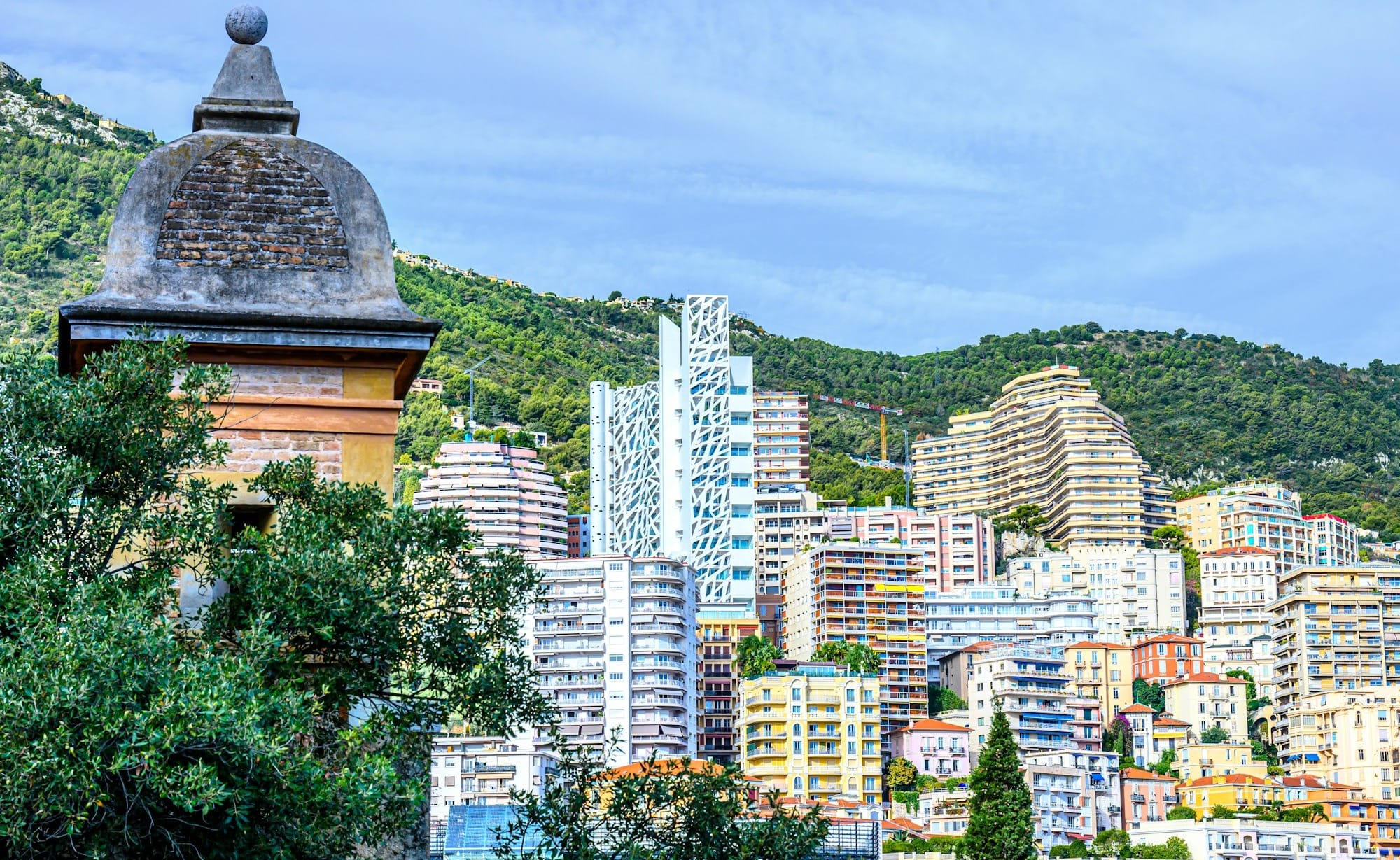
Monaco has never had the luxury of empty space.
Every square metre carries a purpose: a home, a road, a school, a garden suspended above another road. The Principality has spent generations building upwards, downwards and, most recently, out towards the sea. Now, it is attempting something equally ambitious, inviting nature back into the city.
Through its developing “Renaturing the City” strategy, Monaco intends to make greenery an essential part of urban planning rather than something added decoratively once construction is complete. Major future developments are expected to consider vegetation, biodiversity and natural shade from the earliest design stages.
It may sound straightforward. In Monaco, it is anything but.
The Principality has a population density of roughly 20,000 people per square kilometre, leaving little room for traditional parks or expansive natural landscapes. At the same time, Mediterranean temperatures are rising rapidly, increasing the pressure created by hard surfaces, traffic and densely built neighbourhoods.
Concrete, stone and asphalt absorb heat throughout the day before releasing it slowly into the surrounding streets. These so-called urban heat islands can make already hot summer conditions feel even more intense, particularly in areas with limited shade.
Monaco’s answer is not simply to plant a few more flowerbeds. Its emerging approach considers how trees, shrubs, living habitats and planted public spaces can help cool the city, support wildlife and make walking through Monaco more comfortable.
Recent work along Avenue Princesse Grace offers an early example. Planting areas have been expanded, pedestrian spaces improved and additional vegetation introduced to create shade and soften the surrounding urban environment.
Future projects are expected to extend this philosophy to the Honneur II district, nearby pedestrian crossings and Square Bougainville. Landscaping in these areas will be used not only for appearance, but to reduce the amount of heat reflected by exposed surfaces during the summer months.
The plans form part of Monaco’s wider environmental commitments. The Principality’s biodiversity strategy includes urban-renaturing projects such as planting trees and hedges, creating habitats, establishing insect refuges and carrying out ecological restoration.
The ambition is to renature 30 per cent of Monaco by 2030, a striking target for a country where land is among the rarest and most valuable resources in the world.
Yet this may be precisely why Monaco’s effort matters.
It is easy to protect nature where space is plentiful. It is far more difficult to weave it through a city already filled with buildings, tunnels and roads. Monaco’s challenge is to prove that density does not have to mean surrendering every remaining corner to concrete.
The strategy also reflects a change in how cities are beginning to understand progress. For much of the last century, urban development meant replacing nature with infrastructure. The city of the future may require the opposite: buildings designed around trees, roads softened by vegetation and public spaces that offer relief from both heat and haste.
In Monaco, nature will never be allowed to run entirely wild. There simply is not the room. But it can be given purpose, protection and a permanent seat at the planning table.
The result could be a Principality that remains unmistakably modern, while becoming greener, cooler and more human, one carefully planted street at a time.